
About me
I am a lecturer in Biodiversity Conservation at Zhejiang A&F University (China). My current research focuses on the ecological effects of animal personality and complex species interactions in the Thousand Island Lake (TIL), China, a land-bridge islands system created by dam construction.
My main study subjects are mammals, especially small mammals (rodents) that play crucial roles in food webs, seed dispersal, ecosystem engineering, and disease transmission. I employ camera traps to monitor biodiversity and community dynamics of birds and mammals across TIL and natural reserves throughout Zhejiang Province. Recently, my colleagues and I have expanded our research to investigate plant-frugivore bird interactions in Hangzhou’s urban parks and green spaces using arboreal camera traps 1,2.
I integrate programming and emerging technologies to automate repetitive tasks and address fundamental ecological questions. For example, I use Raspberry Pi to monitor seed dispersal by individual rodents, computer vision models (like YOLO series model 3) to automatically identify species in camera trap images, and GPS or Bluetooth collars to track small mammal movements.
Projects
1. The ecological consequences of animal personality in the Thousand Island Lake
In this project, we integrated behavioral tests, capture-mark-recapture methods, automated monitoring devices, and DNA technologies to investigate how animal personality traits in small mammals influence population dynamics and species interactions. I examine whether individual behavioral differences (boldness, exploration, sociability) affect survival, reproduction, and key ecological processes such as seed dispersal, parasite transmission, herbivory, and gut microbiota. This research aims to establish mechanistic links between individual behavior and ecosystem function, advancing our understanding of how behavioral diversity contributes to ecological stability and informing biodiversity conservation.
2. Community dynamics of mammals in the Thousand Island Lake
In this project, we employed camera traps to survey large and medium mammal communities on the study islands. After identifying species from the captured images, we obtained comprehensive community data to assess the underlying mechanisms by which habitat fragmentation impacts the biodiversity of large and medium mammals in Thousand Island Lake. To survey small mammal communities (primarily rodents), we utilized the capture-mark-recapture method. Based on long-term population monitoring of rodents, we were able to further explore the factors influencing rodent population cycles and assess how habitat fragmentation affects rodent fitness in the lake region. This rodent survey is also the basis for Project 1.
3. Mulitple types of ecological networks in cities
In this project, we investigate how urbanization affects complex species interactions across multiple levels of biological organization (e.g., from individuals to communities). Our research primarily examines three key interaction networks: plant-frugivorous bird interactions, pollination, and insect-parasitoid wasp interations. This project aims to provide deeper insights into the cascading effects of urbanization on complext species interactions and the ecosystem services they support.
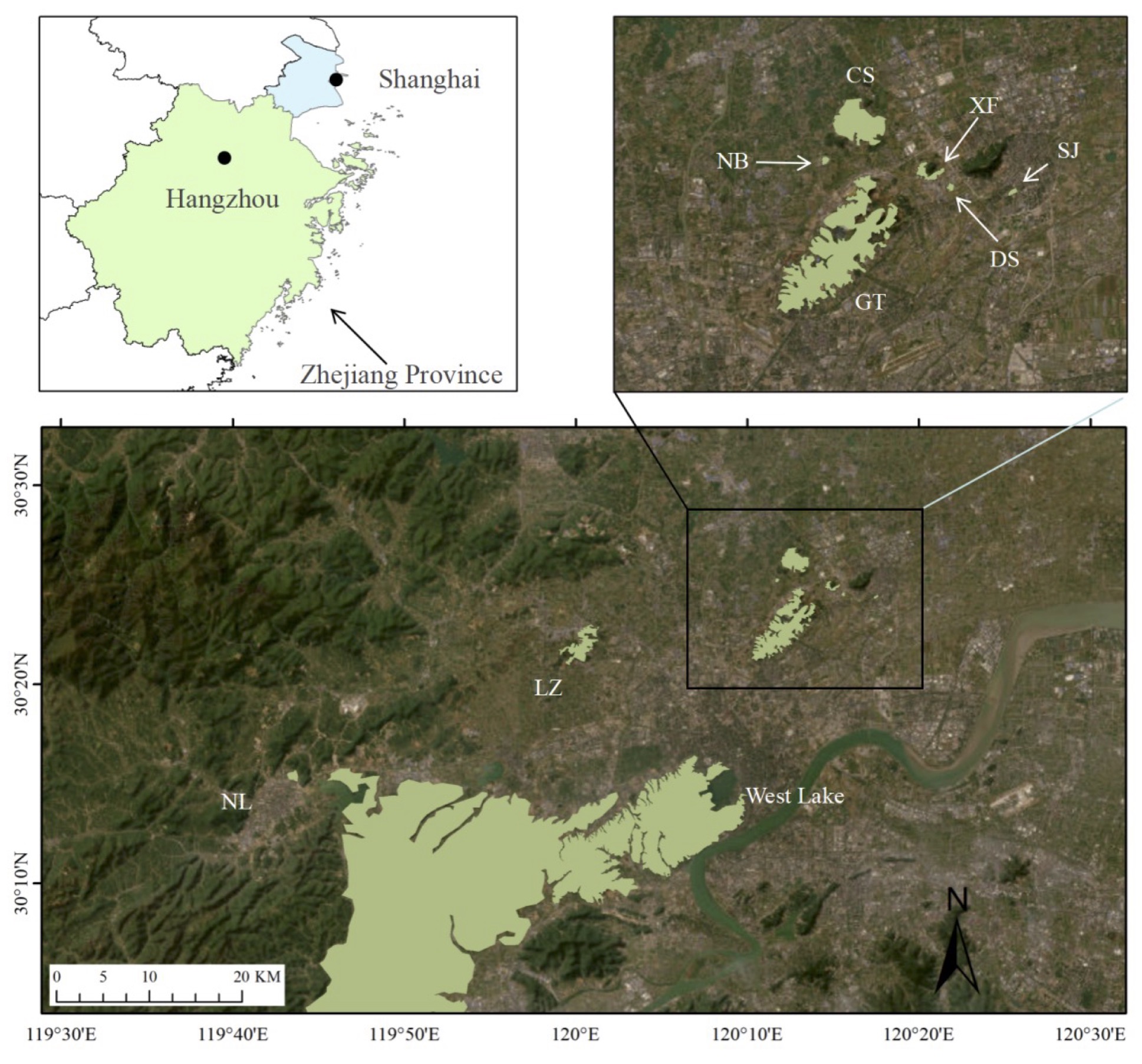
Place to conduct field work
1. Thousand Island Lake, China.

© Dr. Di Zeng
2. Hangzhou City, China
Study taxa
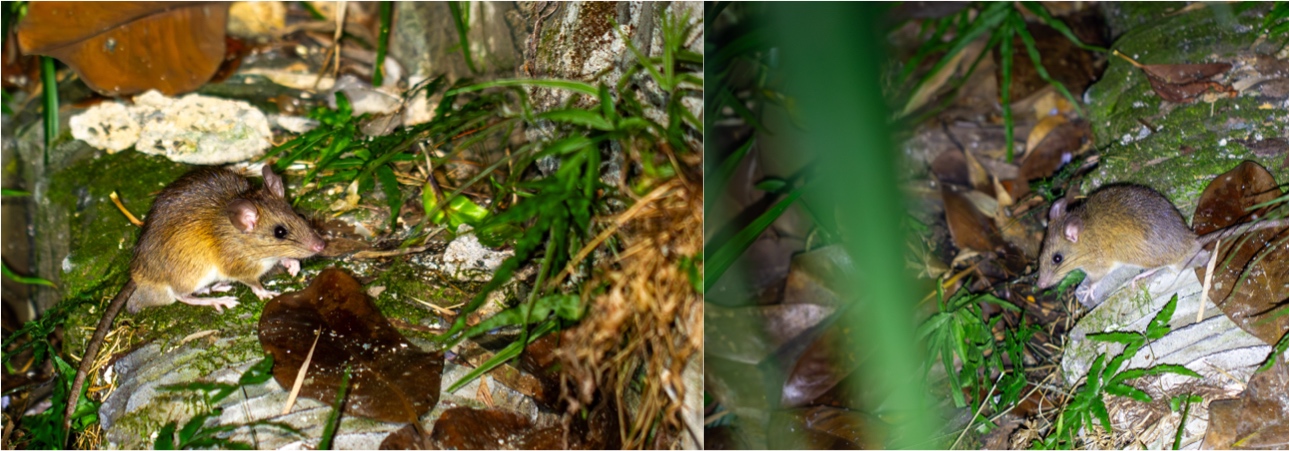
1. Small mammals
© Dr. Di Zeng
2. Large and medium mammals
TBD…
3. Birds

© Dr. Di Zeng
References
Zhu, C., Li, W., Gregory, T., Wang, D., Ren, P., Zeng, D., Kang, Y., Ding, P. and Si, X. (2022), Arboreal camera trapping: a reliable tool to monitor plant-frugivore interactions in the trees on large scales. Remote Sens Ecol Conserv, 8: 92-104. https://doi.org/10.1002/rse2.232 ↩
Zhu, C., Li, W., Wang, D., Ding, P., & Si, X. (2021). Plant–frugivore interactions revealed by arboreal camera trapping. Frontiers in Ecology and the Environment, 19(3), 149-151. [url] https://doi.org/10.1002/fee.2321 ↩
YOLO (You Only Look Once). https://docs.ultralytics.com/ ↩